“Shawn Daniels and his siblings shake off extreme poverty, hunger, a dilapidated homestead and a drunken father, to somehow embark upon an idyllic childhood. Bette Stevens has crafted a remarkable tale of hope and happiness in the face of despair.” ~ Charles Bray (author/editor/reviewer)
I invite you to sign up for my email updates for news on pre-release orders, specials, freebies and more at http://eepurl.com/t-7JP
As someone who has studied the “Arthurian period” at length I have noticed some things that irritate and frighten me. First Knight comes to mind, being wrong in its interpretation and understanding of the story, in error about the love triangle, the philosophies involved, and the armaments. But I have learned to live with it and media like it. After all if a person wants the romantic delusions of the Arthurian period they are either going to enjoy it blissfully or enjoy it despite me.
But for those who want to understand, the socio-economic situation was a fascinating one. Today I would like to start with the bard. Bards have been explained as the storytellers, the entertainers, the keepers of culture. And they were. There is no accurate source that tells us how long they studied their craft, or exactly what they had to learn before they were allowed to…
It’s time for this writer to get writing—finishing up my first novelMORE PURE TRASH (current working title). What’s this novel about?
First of all, it’s a sequel to my short story PURE TRASH released in July 2013. Here’s what I’ve put together (unedited & still in revision state) for the back cover of the novel slated for release Summer 2014. I invite you to leave a comment and let me know what you think of the title (above) and the back cover text (below). As things progress, I’ll keep you posted. Thank you. ~ Bette A. Stevens
Onion sandwiches and dog bone soup… Shawn Daniels is leaving it all behind!
Remember the Good Old Days? You know, the 1950s and ’60s, when America was flying high. The All American Family lived a life filled with hopes and dreams and life’s necessities too.
Shawn Daniels isn’t your typical American Boomer Boy. No, Shawn is a poor boy. He can’t join Boy Scouts or sports teams. There’s not even enough money for what most folks consider the essentials. Besides, Shawn doesn’t have time for any of that. But when chores are done, there’s always time for fishing!
Shawn Daniels is the oldest in a family of four children. His father is the town drunk. Shawn’s family has no indoor plumbing or running water, but they do have a TV. Dad deserves the rewards of his labor at the tannery—television, beer and ballgames—while the boys keep the firewood cut and stacked, haul in water for cooking and cleaning and weed the gardens or shovel snow. Shawn hates school. He’s been the butt of the kid’s jokes for years, eating his onion sandwiches in the cafeteria while others feast on food that he only dreams of tasting.
It’s 1964 and Shawn Daniels is ready to leave it all behind. Shawn’s on his way to U.S. Army boot camp in North Carolina to soak up some southern sun and begin a new life. But for some reason, he just can’t get Mum’s scrapbook out of his mind. When a little fellow with blonde hair sits beside him on the plane, the life Shawn is leaving behind comes back in a flash. The plane’s getting ready to take off, so fasten your seat belt and enjoy the ride!
In its depiction of societal and personal breakdown, a new production of King Lear by Sam Mendes speaks directly and uncomfortably to our own times, says GORDON PARSONS
More than any other of Shakespeare‘s plays, this great symphonic drama of the human condition has mirrored each successive age, often unbearably, with its own self-image.
Our own nihilistic day, obsessed with media accounts of what seems the dissolution of both civilised society and personal relationships, finds its ugly reflection in Sam Mendes’s eagerly awaited production.
From the opening, when Simon Russell Beale‘s ageing dictator enters his conference chamber walled with his own military imperial guard, we recognise a common scene of power and insecurity.
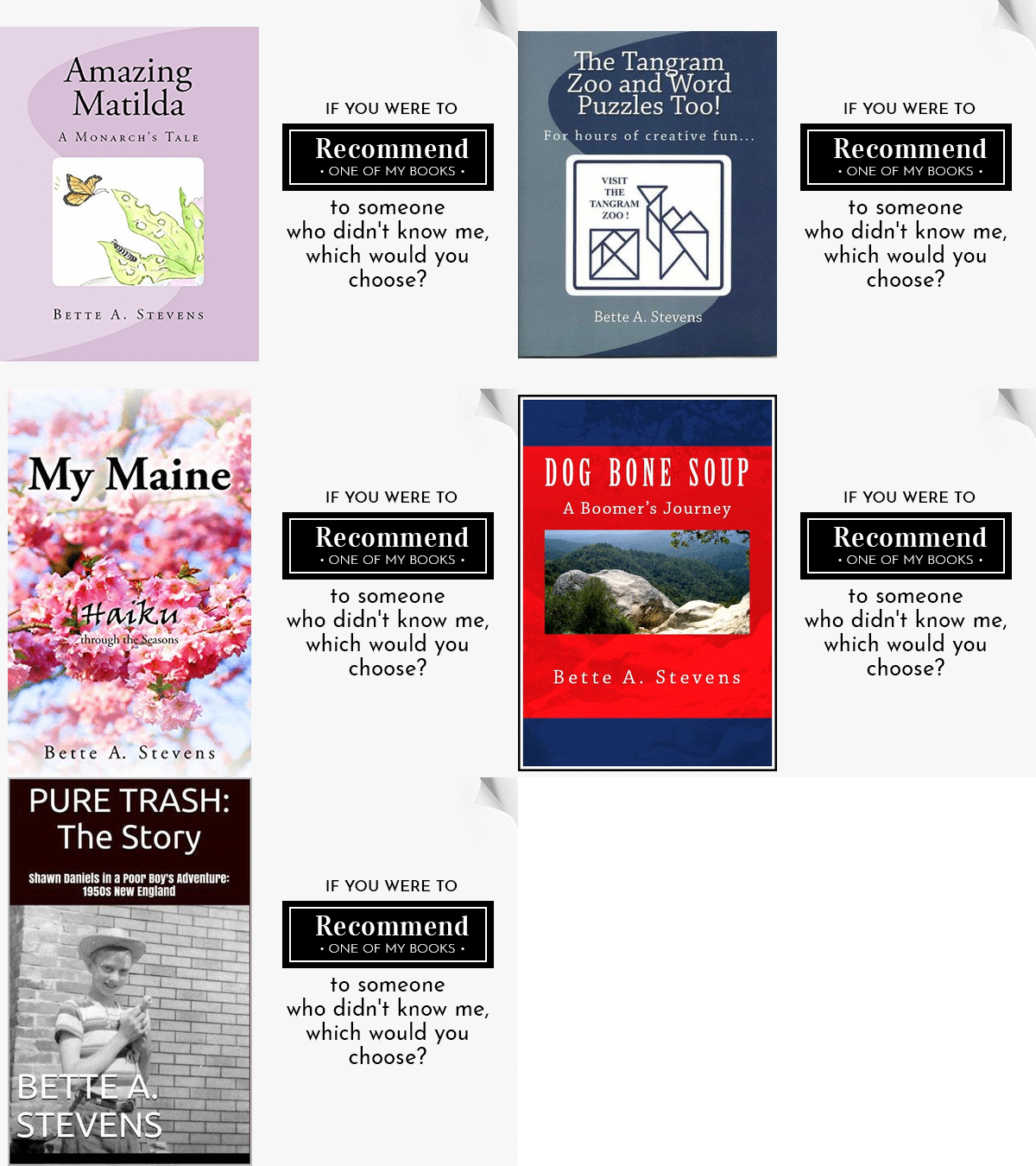
AMAZING MATILDA— February 1— #9 on The Gittle List: Top 10 Children’s Picture Books of 2013 Aviva Gittle Publishing (San Diego, CA): “On the surface, the story is about the birth and transformation of a Monarch butterfly. The underlying story is about the challenges children experience as they grow and learn. It can foster a discussion with your child about the power of perseverance. Heck, it’s also just fun to read!”
THE TANGRAM ZOO—Tangram puzzles and riddles for hands-on learning and fun for the whole family/classroom: “Awesome and Creative!”—S.B.
PURE TRASH, The Story—1950s short story adventure (bullying, poverty & prejudice) for the YA/Adult reader. “Truly moving short story.”Michael Carrier
Are you following Sacred Touches blog? Natalie’s posts are always filled with wisdom from The Master and from many masters of literature as well. ENJOY! Bette A. Stevens
Who is the happiest of men? He who values the merits of others,
and in their pleasure takes joy, even as though t’were his own.
~Johann Wolfgang von Goethe, German writer and Politician
One of my fellow bloggers commented today about the beauty in one of my posts and said she needed the joy. It was such a blessing to know that I had spread some joy in the life of another. So tonight I thought I would share some thoughts about joy. And since this week is A.A. Milne’s birthday I decided to use some illustrations from his book to help do that. Milne was the English author who brought so much joy not only to children but also to those of us fortunate enough to have read the Winnie the Pooh stories to our children.
Joy is not in things; it is in us. ~Richard Wagner, German composer
The Legend of the Christmas Tree (German/Anonymous)
Most children have seen a Christmas tree, and many know that the pretty and pleasant custom of hanging gifts on its boughs comes from Germany; but perhaps few have heard or read the story that is told to little German children, respecting the origin of this custom. The story is called “The Little Stranger,” and runs thus:
In a small cottage on the borders of a forest lived a poor laborer, who gained a scanty living by cutting wood. He had a wife and two children who helped him in his work. The boy’s name was Valentine, and the girl was called Mary. They were obedient, good children, and a great comfort to their parents. One winter evening, this happy little family were sitting quietly round the hearth, the snow and the wind raging outside, while they ate their supper of dry bread, when a gentle tap was heard on the window, and a childish voice cried from without: “Oh, let me in, pray! I am a poor little child, with nothing to eat, and no home to go to, and I shall die of cold and hunger unless you let me in.”
Valentine and Mary jumped up from the table and ran to open the door, saying: “Come in, poor little child! We have not much to give you, but whatever we have we will share with you.”
The stranger-child came in and warmed his frozen hands and feet at the fire, and the children gave him the best they had to eat, saying: “You must be tired, too, poor child! Lie down on our bed; we can sleep on the bench for one night.”
Then said the little stranger-child: “Thank God for all your kindness to me!”
So they took their little guest into their sleeping-room, laid him on the bed, covered him over, and said to each other: “How thankful we ought to be! We have warm rooms and a cozy bed, while this poor child has only heaven for his roof and the cold earth for his sleeping-place.”
When their father and mother went to bed, Mary and Valentine lay quite contentedly on the bench near the fire, saying, before they fell asleep: “The stranger-child will be so happy to-night in his warm bed!”
These kind children had not slept many hours before Mary awoke and softly whispered to her brother: “Valentine, dear, wake, and listen to the sweet music under the window.”
Then Valentine rubbed his eyes and listened. It was sweet music indeed, and sounded like beautiful voices singing to the tones of a harp:
“O holy Child, we greet thee! bringing
Sweet strains of harp to aid our singing.
“Thou, holy Child, in peace art sleeping,
While we our watch without are keeping.
“Blest be the house wherein thou liest.
Happiest on earth, to heaven the highest.”
The children listened, while a solemn joy filled their hearts; then they stepped softly to the window to see who might be without.
In the east was a streak of rosy dawn, and in its light they saw a group of children standing before the house, clothed in silver garments, holding golden harps in their hands. Amazed at this sight, the children were still gazing out of the window, when a light tap caused them to turn round. There stood the stranger-child before them clad in a golden dress, with a gleaming radiance round his curling hair. “I am the little Christ-child,” he said, “who wanders through the world bringing peace and happiness to good children. You took me in and cared for me when you thought me a poor child, and now you shall have my blessing for what you have done.”
A fir tree grew near the house; and from this he broke a twig, which he planted in the ground, saying: “This twig shall become a tree, and shall bring forth fruit year by year for you.”
No sooner had he done this than he vanished, and with him the little choir of angels. But the fir-branch grew and became a Christmas tree, and on its branches hung golden apples and silver nuts every Christmas-tide.
Such is the story told to German children concerning their beautiful Christmas trees, though we know that the real little Christ-child can never be wandering, cold and homeless, again in our world, inasmuch as he is safe in heaven by his Father’s side; yet we may gather from this story the same truth which the Bible plainly tells us—that any one who helps a Christian child in distress, it will be counted unto him as if he had indeed done it unto Christ himself. “Inasmuch as ye have done it unto the least of these my brethren, ye have done it unto me.”
Welcome to 4writersandreaders
I’m a writer inspired by nature and human nature. You’ll find great books, authors, writing tips and more right here. I advocate for kids & families, childhood literacy and the protection of monarch butterflies and their habitat.Happy reading & writing!~Bette A. Stevens, Maine author

 Working on the final draft of “DOG BONE SOUP.”
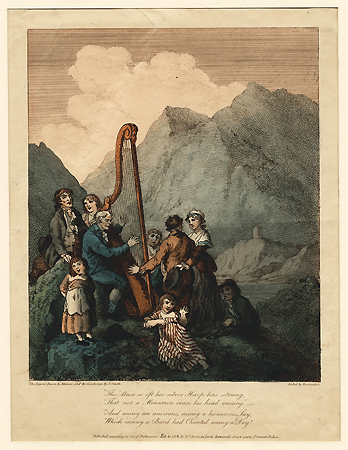 As someone who has studied the “Arthurian period” at length I have noticed some things that irritate and frighten me. First Knight comes to mind, being wrong in its interpretation and understanding of the story, in error about the love triangle, the philosophies involved, and the armaments. But I have learned to live with it and media like it. After all if a person wants the romantic delusions of the Arthurian period they are either going to enjoy it blissfully or enjoy it despite me.









 Bette A. Stevens, Maine Author
Written
on 09/13/2014